


Bathroom Vanity Units: The Complete Buying Guide

 Replacing a tired pedestal basin, or starting a full bathroom renovation? A vanity unit solves two problems in one move: a basin, plus somewhere to put everything a bathroom otherwise leaves lying on the sink edge. Getting the size and type right first time saves a return trip to the shop, and an awkward gap where a toilet roll holder used to sit.
This guide runs through the main types, sizes and materials, so you can shop with confidence. Browse the full range in our vanity units collection as you go.
What Is a Bathroom Vanity Unit?
A vanity unit combines a basin with a cabinet underneath, giving you storage that a standalone pedestal basin can't offer. Instead of hiding pipework behind a thin porcelain column, you get cupboards or drawers for towels, toiletries and cleaning products.
Wall Hung vs Floor Standing vs Countertop Vanity Units
Wall hung vanity units fix straight to the wall with no legs touching the floor. Cleaning underneath is easier, and small bathrooms feel less boxed in as a result. They suit modern schemes best; see the full range in our wall hung vanity units collection.
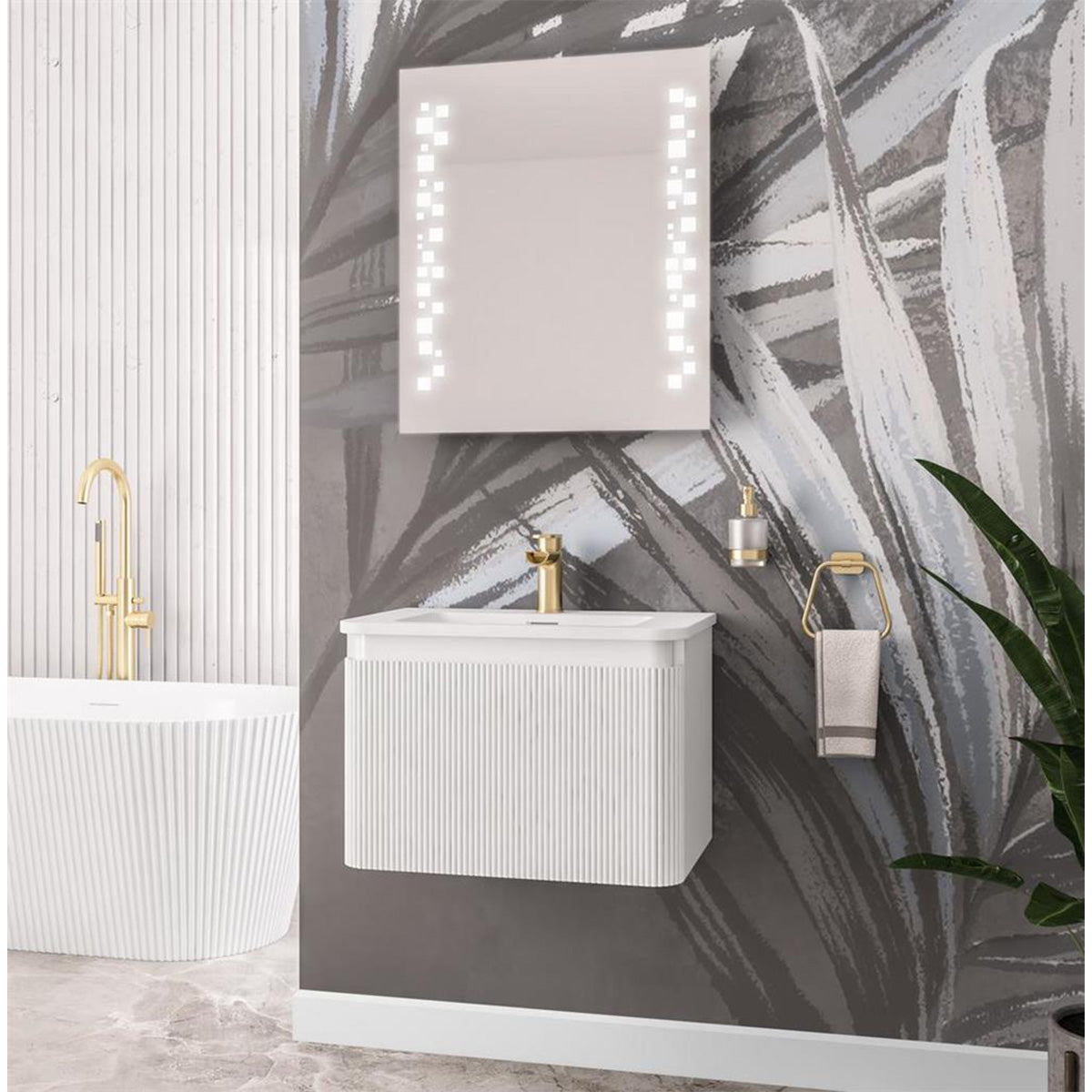
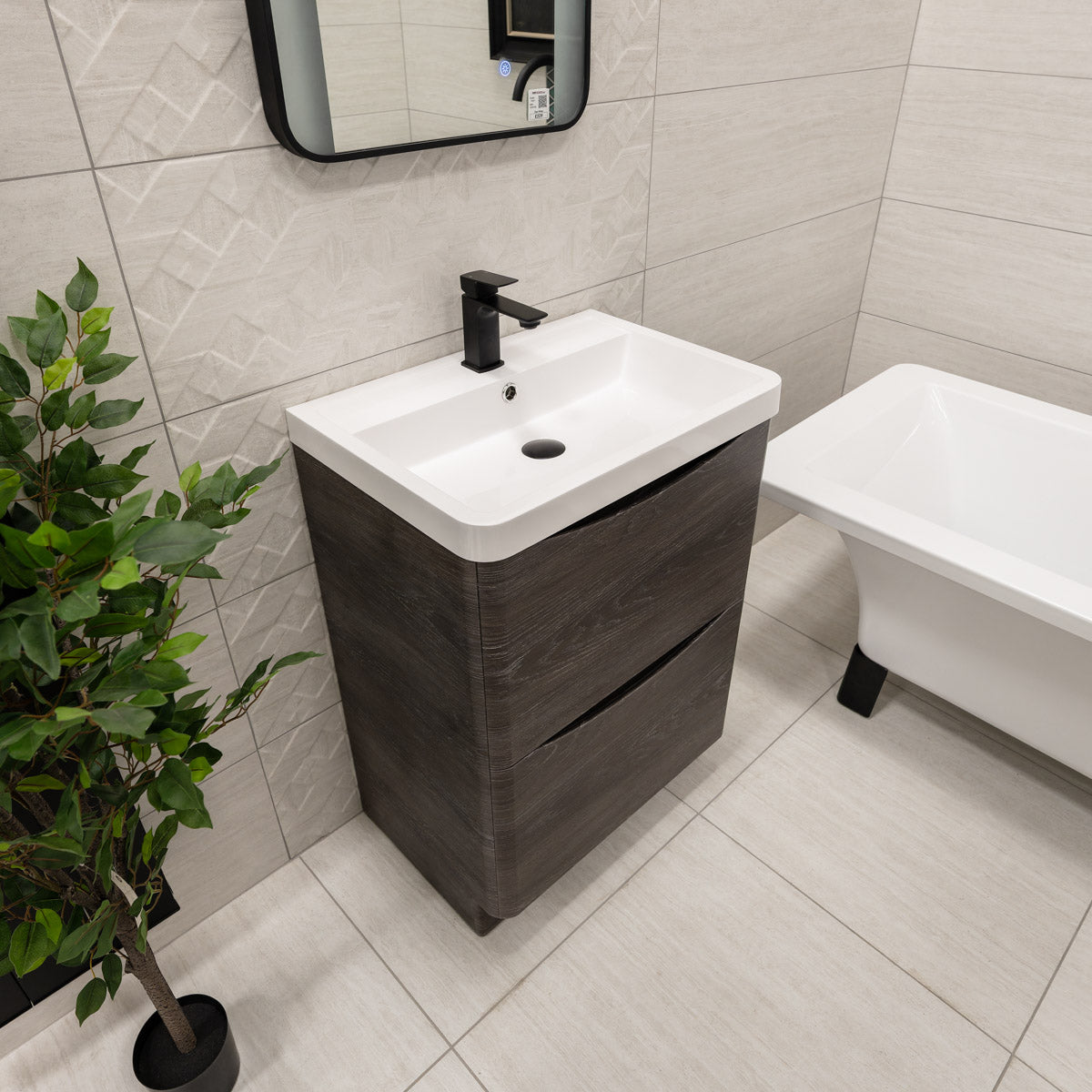
Floor standing units sit on the floor like a normal piece of furniture. There's more room inside for towels and toiletries, and the extra weight makes them feel sturdier underfoot, a real plus in a busy family bathroom. Compare styles in our floor standing vanity units range.
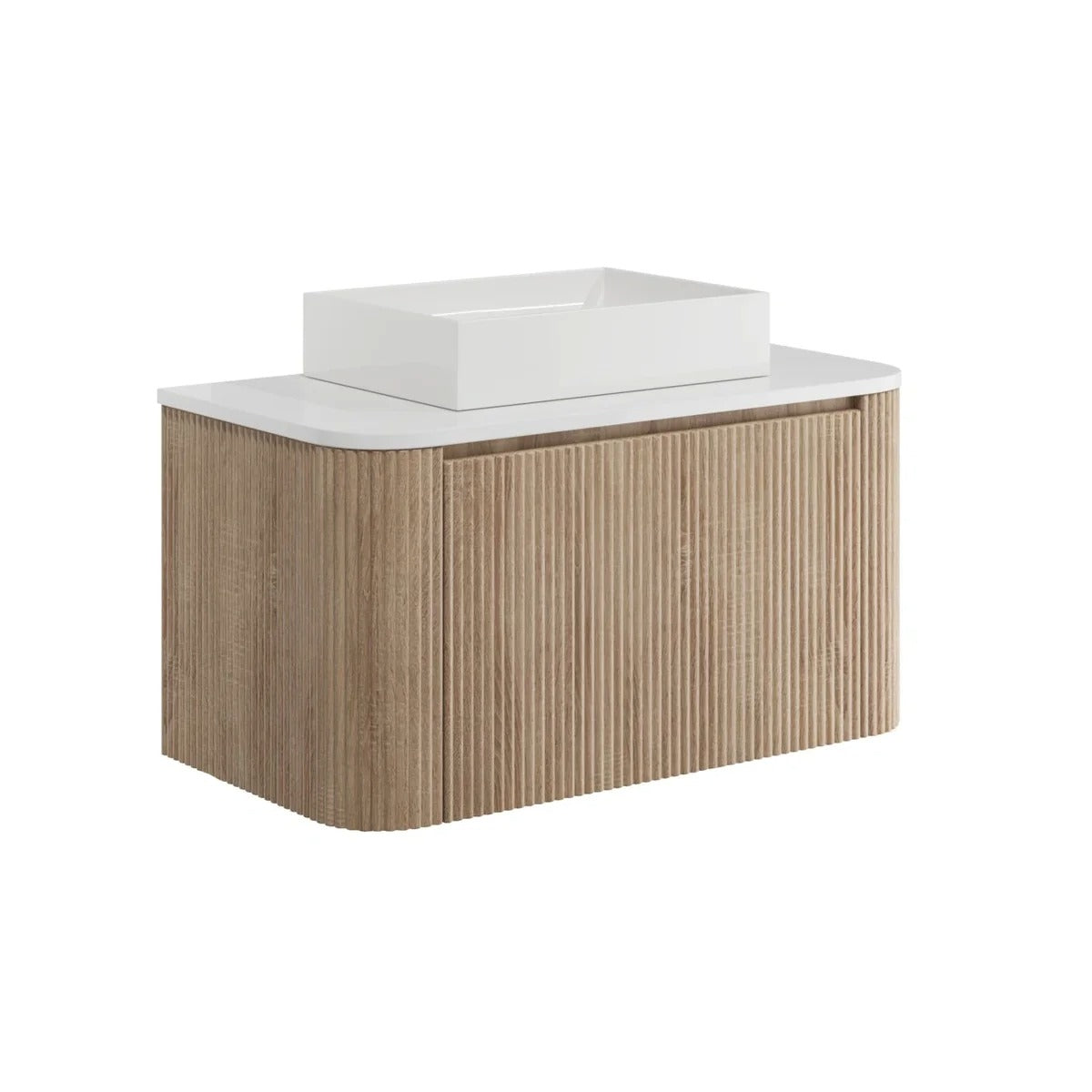
Countertop vanity units flip that again: the basin sits on top of the worktop rather than dropping into it, so the basin itself becomes the visual centrepiece rather than the cabinet. The Linea 900mm oak vanity unit with countertop is a good example of the look.
Vanity Unit Sizes Explained
Vanity units are sold by their width, and most ranges follow similar size bands:
- Small/cloakroom: 400 to 500mm, for cloakrooms and en-suites with limited space.
- Compact: 500 to 600mm, a common choice for smaller family bathrooms.
- Standard: 600 to 900mm, the most popular range for a single basin with generous storage.
- Double/large: 1200mm and above, for two basins or a wide single basin with extra worktop space.
Measure the full width of the wall or alcove before you buy, and leave at least 200mm of clearance either side for doors, radiators or towel rails to open properly.
Small Bathroom and Cloakroom Vanity Units
Tight on space? A compact 400 to 500mm vanity unit still fits a usable basin and a cupboard for essentials. Going wall hung here frees up visible floor space too, which matters in a room this size. Our cloakroom vanity units range is built specifically for these smaller footprints.
Corner Vanity Units for Awkward Spaces
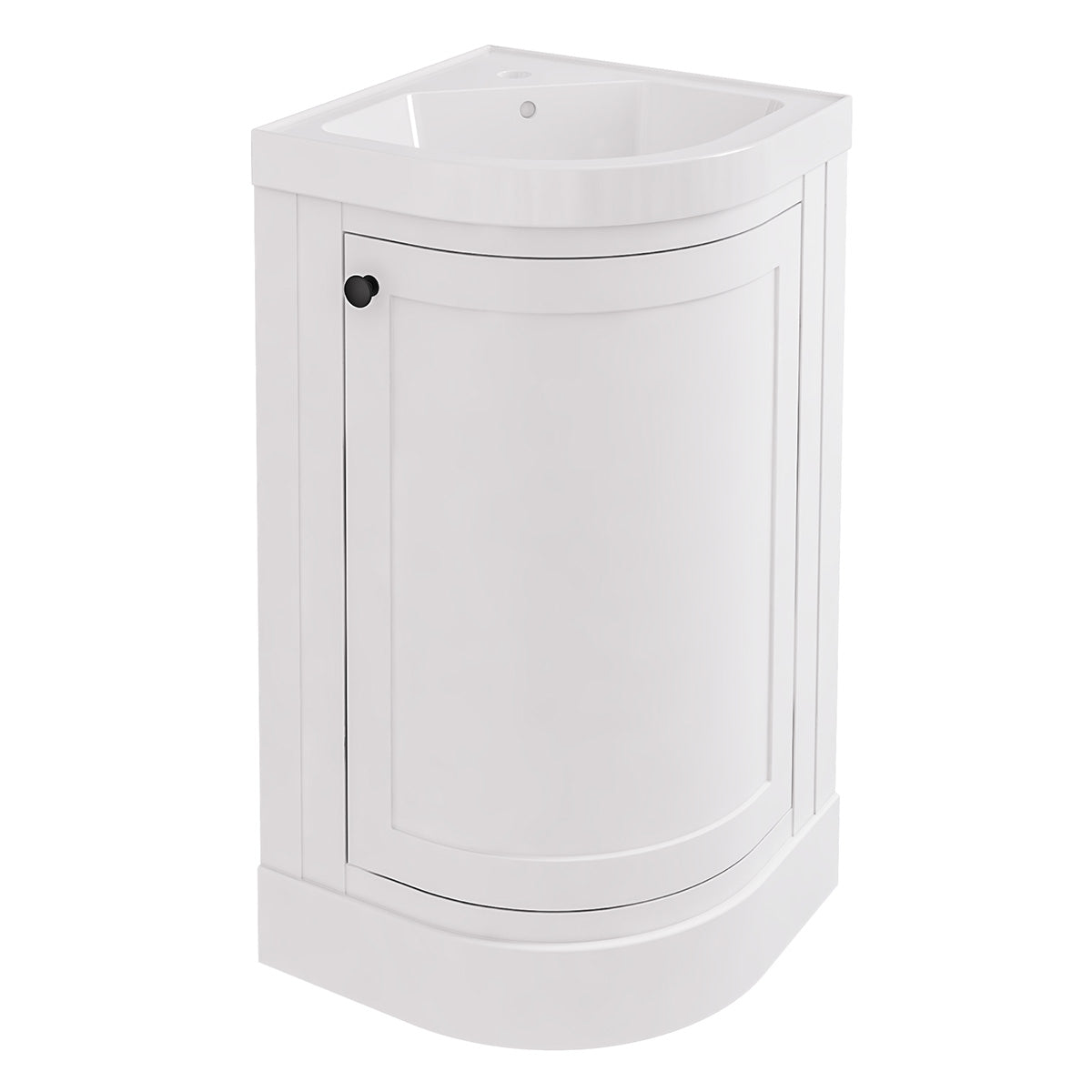
An awkward layout, such as a small en-suite or an under-stairs cloakroom, is exactly where a corner vanity unit earns its keep: it uses a dead corner instead of eating into wall length. The Hardwick 430mm corner vanity unit and polymarble basin shows how much storage a corner design still packs in, despite the compact footprint.
Vanity Units With a Toilet: Combination Furniture
Want a fitted look without a full refit? Combination furniture pairs a vanity unit with a matching toilet unit as one coordinated set. It works especially well in smaller bathrooms, where every centimetre of wall needs to earn its keep, and it saves hunting for matching finishes separately. Have a look at our basin and toilet runs for ready-matched options.
Choosing the Right Basin for Your Vanity Unit
An inset vanity basin drops into a cut-out in the worktop, sitting flush for an easy-to-wipe surface. A countertop basin sits on top of the worktop instead of into it, for a more visible, furniture-like shape. A semi-recessed basin splits the difference: part on the counter, part built in, and suits a shallower unit where full countertop depth isn't available. Whichever you choose, check the tap-hole configuration matches your basin taps before ordering.
Materials, Finishes and Storage
Most vanity units are built from moisture-resistant MDF with a waterproof coating. It copes far better with bathroom humidity than untreated timber ever does. Storage comes as doors or drawers, with soft-close mechanisms now standard on most ranges, so nothing slams or wears loose over time. One recent Bathshack customer summed up the quality end of this well after ordering three units and taps: "fast delivery and the units were very good quality, very impressed." For a traditional, furniture-style finish rather than a modern gloss look, browse our traditional vanity units collection, and pair the unit with a matching bathroom mirror to finish the space off.
Fitting a New Vanity Unit
Confident DIYers can usually mount the carcass and doors themselves. Connecting the basin to the water supply and waste is a job for a qualified plumber though, since it keeps the warranty valid and avoids leaks that can damage the unit or the floor underneath. Fitting a wall hung unit yourself? Read our guide to fitting a floating vanity unit before you start.
Still Weighing Up Which Type Suits Your Space?
That's exactly the kind of question our showroom teams field every day. One customer who called in to ask about a bathroom vanity said staff were able to show her a range of options at different price points and made the whole process quick and easy. If you'd rather talk it through in person than measure it out alone, that's what the showroom is there for.
FAQs
What size bathroom vanity unit do I need? Measure the available wall width and subtract at least 200mm for clearance, then choose the nearest size band, typically 400 to 500mm for small spaces or 600 to 900mm for standard bathrooms.
What's the difference between a wall-hung and a floor-standing vanity unit? A wall-hung unit is fixed to the wall with the floor visible underneath, while a floor-standing unit sits directly on the floor and usually offers more storage volume.
What is the smallest size vanity unit available? Compact cloakroom vanity units start at around 400mm wide, making them suitable for very small en-suites and downstairs toilets.
Can I fit a countertop basin on any vanity unit? Not on every unit. Countertop basins need one with a flat worktop surface designed to take a basin sitting on top, rather than a cut-out for an inset bowl.
Do corner vanity units save much space, and when should I choose one? Yes, a corner vanity unit uses an unused corner instead of a full length of wall, making it a good choice for small or awkwardly shaped bathrooms.
Can I get a vanity unit with a toilet as one combined piece? Combination furniture pairs a matching vanity unit and toilet unit as a coordinated set rather than a single moulded piece, giving you a fitted look with two matched components.
Do I need a plumber to fit a new vanity unit? You can usually mount the cabinet yourself, but a plumber should handle the water and waste connections to avoid leaks and protect your warranty.


